Summer has arrived and besides sweating more than we want to, we have to worry about getting sunburned while we are trying to enjoy the sun and summer. Sun exposure plays an important role in our overall health as well as the health of our skin. For one thing, it is important in the production of natural source vitamin D, and experts feel this is the best form of Vit D available; however, the current trend is to supplement with pills and rely on vitamin D in the diet as it can be difficult to know if you are really meeting your required dose of Vit D each and every day. For many of us, the question on our minds is: “To sun or not to sun?” Certainly exposure to ultraviolet rays from the sun is something of a double-edged sword.
The skin is the largest organ in the body, acting as a shield against the external environment and also controlling the absorption of external substances into the body and subsequently into the blood stream. Most popular sunscreens recommended by physicians who don’t provide the exceptional products that Laser and Skin Care Medspa, Red Deer’s Med Spa offers, contain high concentrations of questionable chemicals.
Two types of sunscreens/blocks are available: chemical blockers, and physical barrier types (recognized as the healthier, safer choice). At Laser and Skin Care Medspa we carry a variety of physical barrier sunscreens/blocks for all skin types.
With so many products available and new products being introduced in to the market, it is easy to get confused when considering which sunscreen is best for you. To help you make healthier decisions for your skin, the Environmental Working Group recently tested 800 commercially available sunscreens/blocks. A dismal proportion, just 25%, of these products provided effective protection for the skin without including a heavy dose of potentially harmful ingredients. According to the groups recommendations, a safe sunscreen:
- ls free of oxybenzone
- Is free of retinal palmitate (a vitamin A derivative)
- Provides a maximum of SPF 50
- Protects against UVA and UVB.
It is clear that the safer sunscreens are those that include zinc and/or titanium oxide to provide a physical barrier for UV rays.
Choosing the right sunscreen can feel like a guessing game but we offer some tips below to help you make an informed choice when it comes to protecting your skin.

Firstly, sunscreens with an SPF of just 8 or 15 are no longer considered acceptable. The depletion of the ozone layer over the last few decades means that experts now recognize that a minimum of SPF 30 is needed in a sunscreen (although any higher than SPF 50 is unnecessary). It is also important to realize that the SPF number refers only to UVB protection, so make sure you choose a product that is labeled as providing broad spectrum coverage for both UVA and UVB. Unfortunately, a high SPF does not mean that you can simply get away with applying less of the product. Indeed, most people tend not to use enough of the product for it to be effective: a minimum of one teaspoon is required for full face and neck protection, with up to two ounces of the sunscreen required to cover the rest of the body in most cases.
Second, it is also essential to realize that certain medications can make your skin more sensitive to the sun and if your skin care program contains Retinal, or if you recently underwent microdermabrasion or a chemical peel, make sure to use a higher SPF formula such as factor 40 or 50 to protect the skin and reduce the risk of pigmentation problems arising.
Chemical vs. Physical Sunscreens
Some sunscreens contain chemicals such as oxybenzone, avobenzone and octinozate that absorb UV radiation, while others (referred to as physical barrier or mineral sunblocks) include zinc oxide and/or titanium dioxide to reflect most of the UV radiation and prevent its absorption. These two mineral ingredients are insoluble and sit on the skin to form a physical barrier.
It soon becomes quite clear which of these two options is the better for your skin as those chemicals that actually absorb the UV radiation break down much faster than the physical barrier sunscreen ingredients. In addition, there is a delay between the application of a chemical sunscreen and the time when it is actually able to start protecting the skin. This is because it can take some 20 to 30 minutes before the chemicals are properly absorbed by the skin and are able to then absorb and neutralize the radiation from the sun. Physical sunblocks, in contrast, are immediately able to block the absorption of
the UV rays as the zinc oxide and/or titanium oxide work by sitting on the top of the skin and do not require time to be absorbed before becoming effective.
UVA and UVB: What Do They Mean?
The idea of sun protection is to shield the skin from short term and long term damage caused by the sun’s ultraviolet radiation. In certain areas of the world this radiation has become very strong as the depletion of the ozone layer has created extensive holes through which more ultraviolet rays can reach the Earth. There are approximately 20 times more ultraviolet-A (UVA) rays than ultraviolet-B (UVB) rays in the atmosphere at any one time. UVA rays are arguably more sinister as they can penetrate glass and are present no matter what the weather conditions. UVB rays, which people are more familiar with, are the cause of sunburn and are more prevalent during summer months, are stronger at higher altitudes, and are particularly problematic in areas of high reflection such as on snow or water (skiers beware). The combination of these dangerous factors is responsible in part for the irreversible skin damage that leads to premature ageing and various forms of skin cancer
Common Myths
Q: Sunblocks and sunscreens are essentially all the same – only the bottles are different.
Answer: There is huge variation in sunscreens/blocks in regards to UV protection, ingredients, and resistance to sweat and water. Look for sunscreens labeled broad spectrum against UVA and UVB and which indicate whether they provide mild, moderate or are highly water resistant. It is not necessary to buy a sunblock beyond SPF 50 as there are no further benefits for the skin beyond this level. The most recognized physical barrier sunblocks are zinc oxide followed by titanium oxide.
Q: Some sunscreens have been linked to cancer development
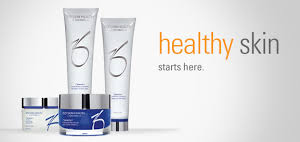
Answer: A chemical called oxybenzone, which is frequently found in commercial sunscreens, has been the subject of recent investigations due to concerns over a possible increase in the risk of cancer development with its use. However, the present data, courtesy of the Canadian Cancer Society, currently shows no evidence to support a causal link. What we do know is that protecting your skin from the strongest sun rays or entirely avoiding exposure at these times is the best defense against skin cancer. As mentioned earlier, the other concerns about chemicals sunscreens do suggest that it is better to switch to a formula providing a physical blocker such as: Total Defense and Repair SPF 50 with water resistance from Skin Medica and Zo Medical Sunscreen & Primer SPF 30. (stocked by Laser and Skin Care Medspa).
Q: The body needs sunlight for vitamin D
Answer: There is a lot of confusion surrounding the blocking by sunscreens of essential vitamin D absorption. Many experts agree that the amount of sun exposure needed to get the required daily dose of vitamin D is minimal and that most people (depending on their latitude and the time of year) are able to obtain this with just 15 to 20 minutes of sunlight exposure a day. This is considered sufficient except in cases where existing health problems may affect the use or synthesis of vitamin D in the body. Furthermore, over the last 30 years or so there have been significant increases in the fortification of foods with vitamin D (including dairy products) as well as the availability of soluble vitamin D supplements, providing some reassurance for those concerned about levels of intake.
Q: Sunscreens are only needed in the summer months
Answer: This is definitely a misconception; any time that you are exposed to sunlight, even inside your house or driving in your car, your skin is being exposed to harmful rays. Overcast weather and rainy days don’t protect you from UV rays as they still pass through clouds, just with a little less intensity. At Laser and Skin Care Medspa in Red Deer we provide a variety of sunscreens/blocks for all types of lifestyles, such as Total Defense and Repair SPF 50 with water resistance from Skin Medica and Zo Medical Sunscreen & Primer SPF 30.
Q: Light-skinned people are the ones that really need sunscreens or blocks
Answer: This idea is definitely wrong! Even the darkest of skins can burn, resulting in permanent adverse effects including hyperpigmentation and cystic changes in the skin. It is true that those individuals with olive tone or darker skin are less likely to burn but, unfortunately, they are still vulnerable to sun damage and sun-induced aging. For those with such skin types, the effects of photo aging can be seen as darker blotches and increased pigmentation. There is no such thing as a healthy tan: A tan is an indication of a skin reaction to excessive sunlight with the spectrum of damage seen as full-blown sunburn that goes from pink to red to blistering and resulting in the three degree phenomena of skin sloughing off.
Q: Sunscreens make my skin greasy and/or give me more acne
Answer: The greasiness of sunscreens has been a thorn in the side of the sunblock industry since such products first appeared. Throughout the decades many of the products’ formulations have improved but most of the over the counter commercial products (because they use chemical barriers) just cannot get away from that gooey feeling that people complain about. Unfortunately, for those with sensitive skin, acne, rosacea or psoriasis this is particularly problematic.
Fortunately, however, there are oil-free sunscreens and healthier options -the key is to know where to find them. Laser and Skin Care Medspa specializes in providing only therapeutic medical grade products that provide the necessary skin protection without the negative effects of greasiness and bacterial build-up in the skin
There is so much more to say about the science and marketing of sunscreens and sunblocks but I hope that this information answers the most “burning” questions you have and helps you to make a more informed choice when it comes to protecting your skin.
If you have any questions on this topic then PLEASE ASK US either by leaving a comment below or by contacting the Medical Spa directly at 403-347-8050. We are more than happy to help you figure out what is best for you to protect your skin from sun damage and preserve the health of your skin.