COSMETICS FROM ANCIENT TIMES

Cosmetic development through the eons has a fascinating history. There is evidence of “cosmetics” in the Sumerian culture (Sumar – known as Mesopotamia then and now as Iraq and Kawait) as far back as 10,000 years ago. Sumerians founded the first civilization of towns and cities before 5,000 BC. They’re responsible for developing the wheel about 3,000 years ago, the plow, time clocks and writing, number system,  a phonetical language, money, math, invented government, irrigation, astronomy  and metallurgy, so it is not surprising that the cosmetic industry was born in this society as well. Henna, a flowering, fragrant plant of the area, was used for hair and nail staining in colors depending on the concentration that would vary between orange, red and brown. One hundred percent henna is safe, rarely causes reactions so traditional henna is exempt from regulation.

There is no safe “black” henna which has been cut with black stains from various sources and can be very harmful to health and can cause serious skin reactions such as blistering and second degree burns. Lip staining and colors were created from iodine and bromine harvested from algae in seaweed. Bromine and iodine are poisonous when taken internally. In modern society this combination was turned into an antiseptic used in hospitals known as Betadine, used to this day. Unfortunately, women would have died over time along with the men that kissed them. Other sources were looked for and people turned to plant dyes and beetles.

In Egypt, geographically close to Sumar, similar trials and errors were occurring. Certainly by 3,500 BC the Egyptians were the cosmetic kings of the world and have been recognized for the invention of sophisticated cosmetics. Decorative palettes still with stains have been found in tombs and diggings that were used for grinding rocks, color from minerals and plants. We have come a long way and yet we haven’t. They also were the society that developed a perfume industry that had far reaching markets. Cleanliness was considered god like and daily bathing and applications of scented compounds placed an ever growing demand on the chemists of the day.

A woman of these times except for dress would not look much different if you passed her on a street with her full complement of face artistry – colored eyebrows, eyelashes, eye shadow, lipstick, foundation as well as hair dye and nail lacquer. Woman wore cosmetics to please the Gods, sexual attraction was secondary. Men routinely wore makeup, in particular eye and lip colors.

To their demise, copper, lead and arsenic were the main ingredients in their products which as time went by, were discovered to be toxic creating mental and physical illness and death to many. Crushed copper malachite was traditionally ground to create a beautiful green powder that was mixed with water or sticky tree gum +/- lead for spreading and mixed with crushed precious stones for the upper class. Below the lower lid, black and dark gray shadow was applied often with crushed gemstones and pearls on eyelashes as well. Sparkly was definitely in!

All society level wore some cosmetics, particularly around the eyes.  Eyeliner (kohl) was worn by all, including children. It had been discovered it controlled eye infections (conjunctivitis or pink-eye) which was a very common problem living in a windy desert. Kohl also helped with glare from the desert sun, does this sound familiar? This concept is still in use in many of our sports to prevent glare.

Kohl became popular over 5,500 years ago. The formula essentially remained unchanged. It was a blend of ground lead, sulphur, powdered herbs, ash and franchincense – an essential oil made from resin from the Boswellin tree of India, Africa and Middle East. Many suffered the consequences of chronic lead poisoning. Again,  ground pearls and precious gems were crushed and added to this mixture for the upper class. Blush and lip coloring were made from red clays and insects crushed and mixed with animal fat and water. Lipsticks believed to have been created in Sumar had shimmer added from the pearlescent found in fish scales. The faces of ancient times were obviously a glow with sparkle, shimmer and color.

This sticky, glittering mess was cleaned off with varieties of scented vegetable and animal oil soaps. Body lotions were concocted from honey mixed with beeswax/goose grease or other animal fats and vegetables oils such as castor and olive, flax seed and sesame. As the toxic effects of the original iodine/bromine dying of lips became known, plants and bug dyes took over. Cleopatra in the 1st century BC was known to use red dyes crushed from beetles (cochineal insects) that produced carminic acid which is still used in lip products today. Cosmetics have delineated social status for thousands of years, either  societies have shunned or promoted them.

So back to the story about Jane. Minerals have come back full circle with healthier ingredients. Glitter and shimmer have been back in vogue for some time from foundations to blushes to bronzers and mascara. Jane Iredale skin care has stepped up through the years and had provided healthy alternatives to the over the counter make up lines.

We have these ancient cultures to thank for the ground work and compounding that became the basis for the cosmetic industry evolving into what it is now thousands of years later.


REAL MINERAL MAKEUP – ALL ABOUT JANE

Jane Iredale is almost a household name in the world of healthy makeups. The real Jane was born in England but moved to the USA to study entertainment in New York and worked in film and TV as a casting director/writer/producer. She worked with the Hollywood notables such as Susan Sarandon, Glenn Close, Sarah Jessica Parker and directors like Stephen Spielberg as well as programming for many years with the BBC.

By the early nineties, in her words, she was experiencing burn out in that industry and started to think about a needed change for something better in the skin care that actors/actresses were applying, which was for many of them, aggravating skin problems such as acne and rosacea.

In 1993 there was no true mineral makeup company. What was available were long standing lines of oil by-product and chemical soups for beauty products. She found a female formulator and a female chemist and along with her, developed a product that was healthy for the skin yet covered well. Her big break came when she linked with a plastic surgeon who was one of the early pioneers in the new laser resurfacing industry who needed a safe option for post treatment cover-up. Soon the word was out and the medical community came on board.


The first product, a loose powder in 5 colors was put on the market in 1994 and quickly morphed over a few years into the most popular seller – the pressed mineral powder – PurePressed Base with sunscreen added. It was now 1996. Jane was able to set the bar high and define what is in the real mineral makeup.
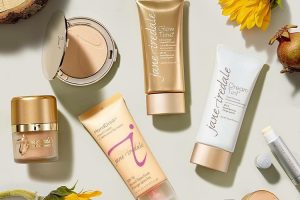
1) If it has talc/nylon/cornstarch in the ingredients – it is not mineral.

2) Real mineral based products have iron oxide/mica/titanium dioxide.

3) Sunscreen has to be a minimum of 15 SPF and contain titanium dioxide or zinc oxide minus a plethora of synthetic/chemicals, many of which are known to be carcinogenic. (see https://laserskincaremedspa.ca/the-confusing-story-of-sunscreen-and-sunblocks-2/)

The Jane Iredale skin care makeup line is now 25 years old. It is vegan-based, no animal testing, cruelty free and now available in over 40 countries around the world with approx. 400 products. The main production plant is still situated in Massachusetts USA. “Jane” as it is referred to by the die-hard users, has received and continues to outperform other wannabes. The line is.

1) Recognized by the Skin Care Foundation of America

2) The primary recommended skin care line by dermatologists and plastic surgeons in North America

3) Holds a natural and organic certificate by ECOCert

4) It is #1 for the tenth time for the healthy choice by beauty professionals

5) It continues to win national and international beauty awards


What makes Jane Iredale products special:

1) QUALITY – the use of ingredients provide the best in performance, coverage, application and texture. The products have gone through human instant patch test for irritability and sensitivity as well as testing for heavy metals and photosensitivity on every product developed.

2) 4 products are 4-in-1’s in that they work as a foundation/concealer/sunscreen and provide active skin care benefits.

3) COVERAGE – exceptional for tattoos, bruising, post treatment redness and damage to the skin.

4) NON-COMEDOGENIC (non-pore clogging) – providing a protective, healing, breathing cover that will not clog pores and not create acne.

5) SUN PROTECTION – 6 products have the seal of recommendation from the Skin Cancer Foundation, for the prevention of sun induced damage to the skin.

6) ADHERENCE – good mineral binding creates resistance to running, smearing or creasing for hours.

No tear stains down the cheeks! In spite of being water based, it will stay in place even when under water for extended periods of time unless physically disrupted by wiping off. Because the products “float” on the skin surface rather than fill into the pores, removal is simple with a microfiber cloth (Magic Mitt) and plain water. Problem skin follows this with an antibiotic cleanser for further help.

7) ALLERGY RISK – is very low due to the intense testing

8) ANTI-INFLAMMATORY – an extra step to include ingredients that will contribute to skin health

9) NATURAL PRESERVATIVES – there is always a need for something but Jane Iredale avoids the known nasties – parabens and phenoxyethanol.

10) NO NANA-PARTICALS (micro-small) minerals in the products therefore enforcing no pore clogging

11) RANGE OF FOUNDATION SHADES – the ability to cover all skin color types from very white to black with no problem color matching

12) RANGE OF FINISHES – minerals interact with light to give that glowing soft effect. The Jane line range is from sheer to full coverage, from luminescent to velvety to matte depending on the individual’s desire. For example the best-selling PurePressed Base SPF 20 is available in 24 shades, simple, quick and easy to apply with a sponge.

UNDERSTANDING SUNSCREEN LABELLING

The FDA (Federal Drug Agency) and Health Canada have regulations on some claims on labeling but some are unregulated. The majority of sunscreens in Canada come across the border.

In 2018 the American Academy of Dermatology (AAD) made patient education a priority. What is recommended is a broad spectrum product with an SPF of minimum 30 or higher and water resistant.

But what does this all mean when reading labels and the back of the bottle?


REGULATED CLAIMS

1) SUN PROTECTION FACTOR – defined as the ratio of minimum redness dose (MED) of protected skin to unprotected. This is been rigorously listed on skin types 1-3 for at least 10 subjects on every product. Many products only cover UVB and not UVA, which equally needs blocking.

2) BROAD SPECTRUM PROTECTION – this is more complicated in testing and involves PMMA plates (polymethylmethacrylate), irradiation, spectrum meters and wavelength measurements. Both UVA/UVB are measured. UVA is also a major contributor to skin again and skin cancers. Technically if products don’t pass the broad spectrum test they must display the following – skin cancer, skin aging alert. Look for that, whether on the front of the bottle or the back and set it back!

3) WATER RESISTANCE – This is tested in an indoor body of fresh water by subjects. The water is maintained at 22-32°C. Moderate exercise is obtained over 20 minutes in water, followed by 15 minutes drying off without toweling. After 2-4 repeat immersion cycles the SPF testing is done to prove water resistance at 40 minutes or 80 minutes.

However, this rigid testing is not really what normal outdoor activity means for many people. Therefore labeling will read – apply after toweling off/apply after sweating/or swimming or every 2 hours. This adds up to a lot of if’s, and’s and possibilities.

Vigorous or contact sports need to apply even more frequently as sunscreens are not tested for durability. To sum up – what is the point of even giving it even regulated status?

4) INSTANT PROTECTION – there really is no such thing. Chemical blockers need at least 15-30 minutes as they have to be absorbed into the skin deep enough to provide a chemical reaction. Certain common chemicals such as avobenzone, oxysalate oxycyrlate, oxybenzone in sunscreens fall into this category, all considered by many studies unhealthy. Physical blockers – titanium dioxide and zinc oxide don’t need to absorb into the skin and are often considered “almost instant”. (Refer to https://laserskincaremedspa.ca/the-confusing-story-of-sunscreen-and-sunblocks-2/)

5) EXTENDED PROTECTION – evidence suggests chemical sunscreens can maintain photo-protection well after the standard 2 hours but repeated application can cause toxic, unhealthy build up. Physical blockers are more photo-stable and theoretically should perform better for long term expectations. If a product claims and user instructions state for extended protection it has submitted a New Drug Application (NDA) with the empiric testing required. Unfortunately, empiric means the treatment is based on “experience and a clinical educated guess in the absence of complete or perfect information” (Wikipedia). With this description it is not reassuring on reliability.star of sunscreen on ladies back


NON-REGULATED CLAIMS – “MYTHS”

1) SWEAT-PROOF/WATER-PROOF/SUNBLOCK – these terms have been banned since 2012 as the FDA calls these claims misleading and untrue

2) “BABY” SUNSCREEN – there is no healthy, safe baby sunscreen. Under 6 months no sunscreen is to be applied and the recommendation is sun avoidance and the baby to be kept covered. Infants greater than 6 months to at least 2 years old, the tendency is to either apply nothing or use standard sunscreen. It is best to look for physical blockers not only to avoid unhealthy chemicals but also the potential irritants and allergens that can sensitize a child.

3) SENSITIVE SKIN & HYPOALLERGENIC – these labels are totally unregulated and can’t be trusted to state what they claim. It is best to just avoid using these sunscreens.

4) NON-COMEDOGENIC – the group most likely to get acne are using sunscreens the least because they tend to make their acne worse. There are no standardized tests. Products that claim this try to avoid using these particular products – isopropyl palmitate, butyl stearate and cocoa butter.

5) ORGANIC – people value the word organic. In the sunscreen industry it is a play on words. The active ingredients don’t meet the NOP (National Organic Product) Seal. The inactive ingredients are recognized and can be labeled. For example, oxybenzone has a carbon molecule and therefore is allowed to pass as organic! It is known to have carcinogenic properties and disrupt hormones in the body and is listed as an 8/10 as a toxic ingredient. Yet the Canadian Cancer Society has found to date to support it as not increasing cancer risk.

6) DERMATOLOGICALLY TESTED/RECOMMENDED/CLINICALLY PROVEN – these words can mean a few test cases or a large trial group. The meanings of these claims vary a lot compared to the reality and cannot be reliably interpreted.

It would be wise to become a back of the tube label reader and ignore the funny jargons and visual distractions on the bottles. Over 30% of the over the counter sunscreens don’t meet the criteria. Here again is the list of chemical sunscreens containing synthetics such as oxybenzone, octinoxate, retinol palmitate, homosalate, octocryline and paraben.

All these chemical sunscreens contain carbon based compounds which create a chemical reaction and work by changing UV rays into heat and then releasing the heat from the skin. Chemical sunscreens should definitely be avoided by pregnant women, oxybenzone in particular which is one of the commonest chemical sunscreens, has been found in breast milk and can interfere with fetal development. The only safe sunscreens for pregnancy should be titanium dioxide and zinc oxide mixes or zinc oxide by itself.


There has been a recent article on Google news from CNN (https://www.cnn.com/2019/05/06/health/sunscreen-bloodstream-fda-study/index.html) regarding sunscreen entering the bloodstream. It states that “Oxybenzone was absorbed into the body at about 50 to 100 times higher concentration than any of these other three chemicals they tested.” Followed by statistics to support other health issues that are caused by this ingredient, such as, testosterone levels, hormone changes, pregnancy and birth issues, allergies and breast milk. Shortly after this article came out CTV also discussed the issue. (https://apple.news/AUTF-ktAtRZGSSmxua0qqwQ)

Taken as a group these chemicals to various degrees are hormone disruptors, cause allergies and sensitivities, and have toxic effects on internal tissue.